
2026.2.1
When a lens captures a scene, it projects a circular field of light onto the camera's internal plane known as the image circle. The diameter of this circle defines the lens's "coverage," or the maximum area where it can produce a sharp, usable image. While the lens projects a circle, the camera's image sensor is typically a rectangle.
To achieve a clean, professional look, the image circle must be large enough to completely encompass the sensor's surface. This is determined by comparing the diameter of the image circle to the diagonal (hypotenuse) of the rectangular sensor.
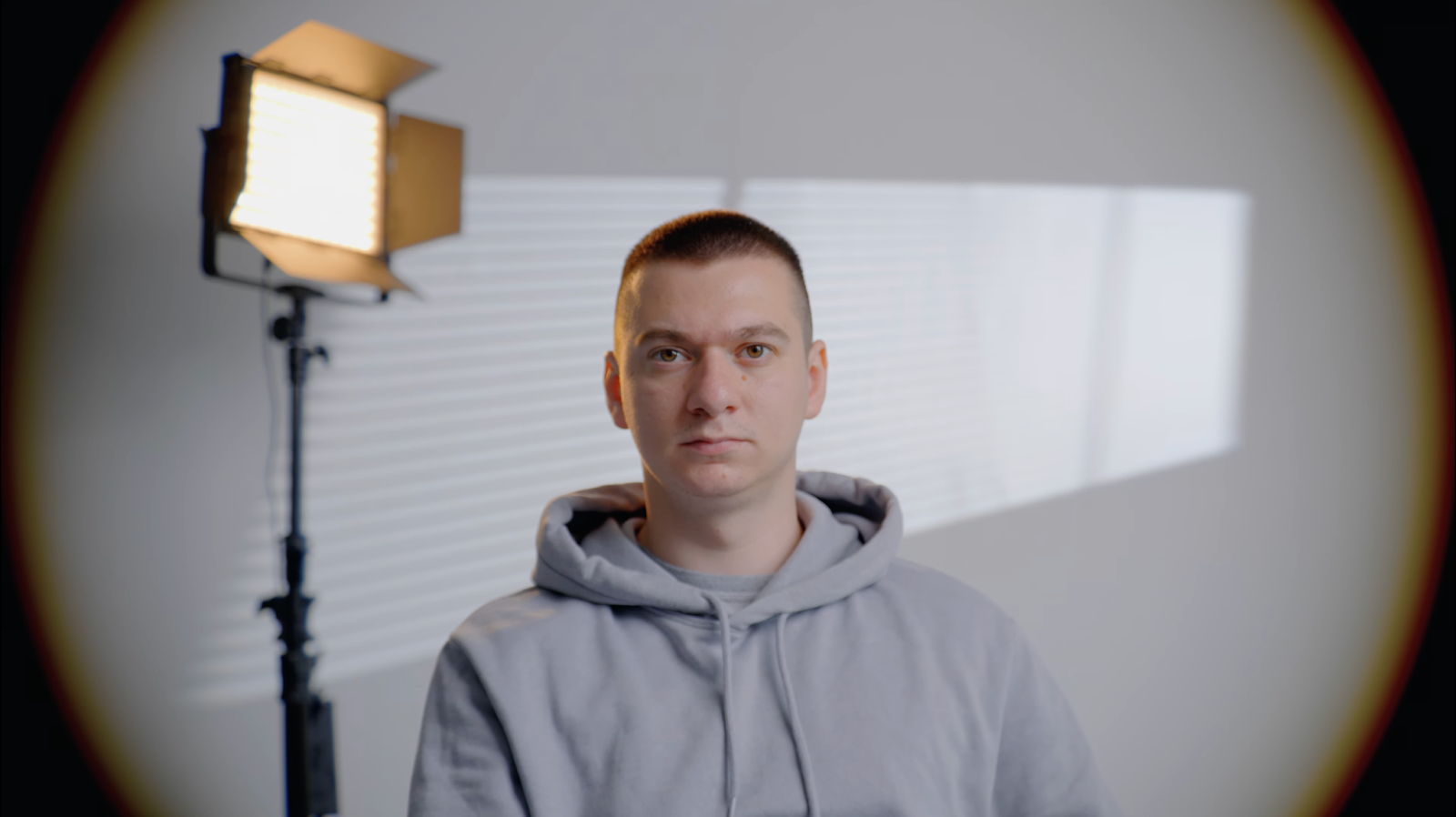
Pictor Zoom 50-125 (S35 lens) Mount on Full Frame Camera
If the sensor's corners extend beyond the circle's edge, it will lead to undesirable images. The most significant result is that the image will suffer from heavy vignetting or total blackness in the corners. Even before the image goes completely black, the areas near the edge of the small image circle will exhibit a severe decline in quality, heavy color aberration, dramatic loss of sharpness.
The Advantage of "Optical Oversampling"
In optical engineering, the perimeter of a lens's projection is typically where performance begins to degrade. To mitigate this and maintain superior image quality across the entire frame, lens designers often engineer a "safety buffer" by creating an image circle significantly larger than the sensor it is intended to cover. By ensuring the sensor only occupies the center of the projection—the optical "sweet spot"—designers can deliver consistent sharpness and minimize peripheral flaws.

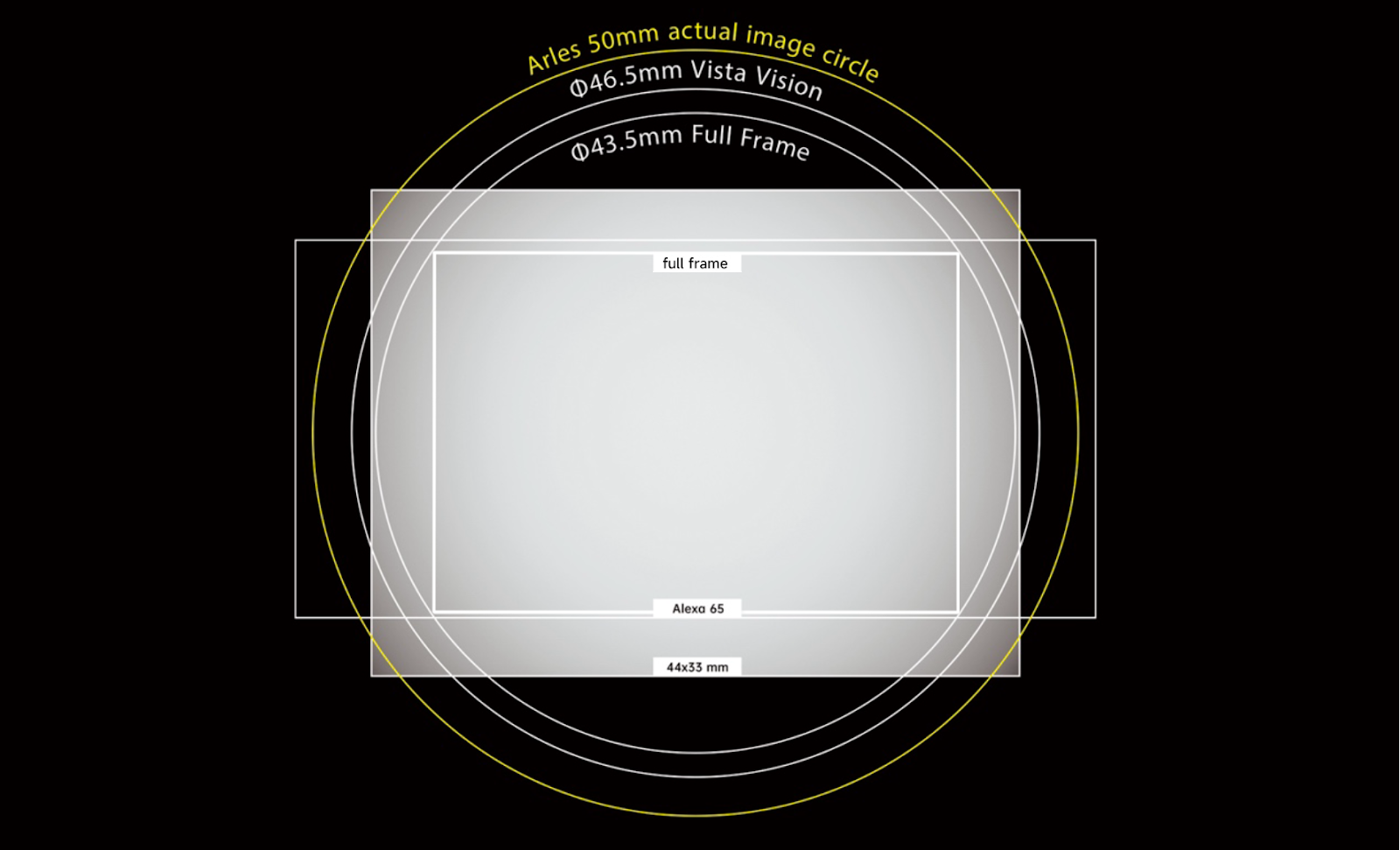
Image circle of Vespid Prime 2 compare to different sensor
A clear example of this design philosophy is the DZOFILM Vespid Prime 2 18mm T1.9. While specifically designed to cover a Vista Vision sensor with a 46.5mm diagonal, the lens actually projects a much larger image circle. This expansive coverage allows it to physically illuminate even massive 65mm sensors like the Blackmagic URSA Cine 17K with only slight vignetting.
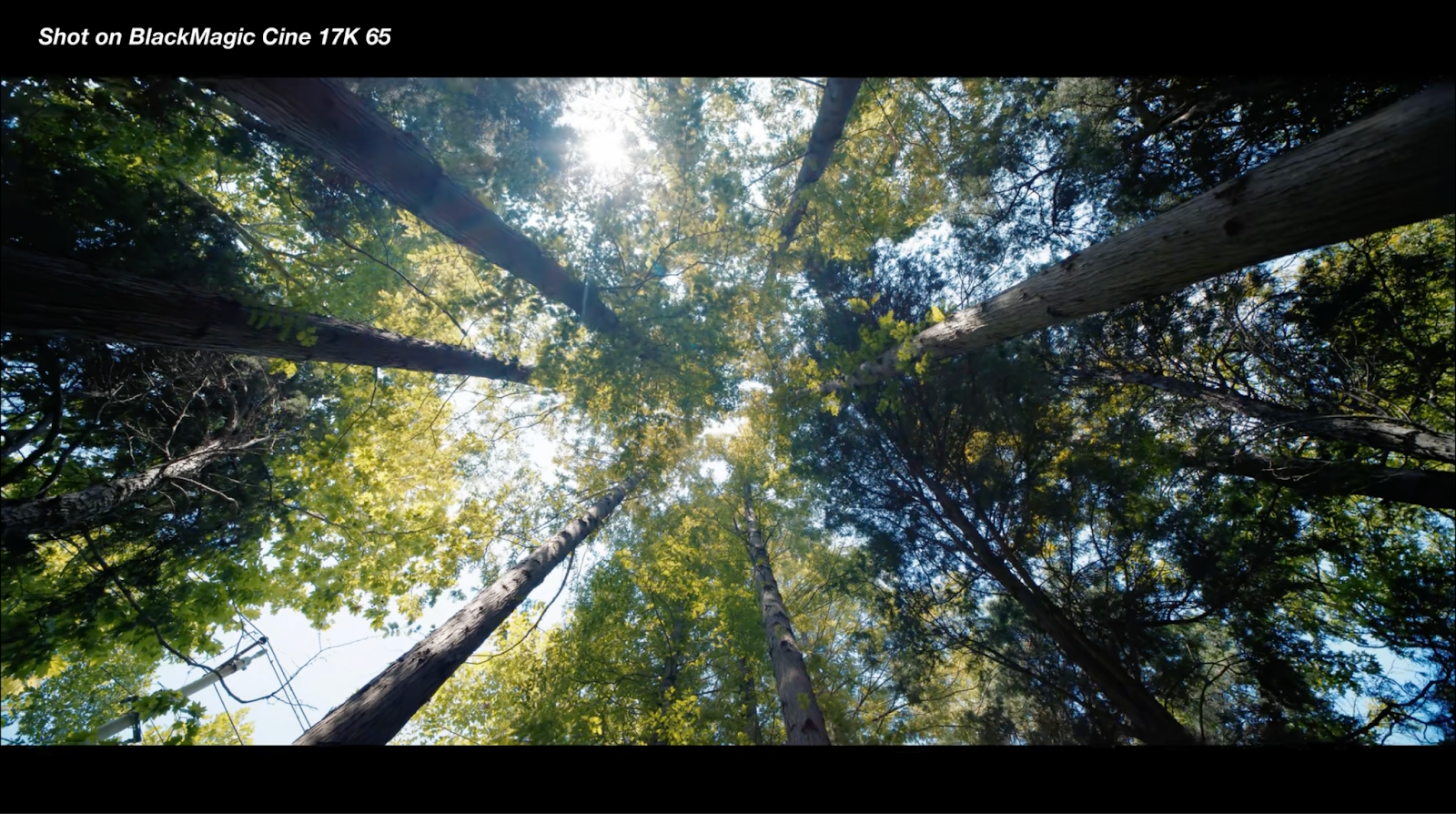
Shot with DZOFILM Vespid Prime 2 on BlackMagic Ursa Cine 17k
However, pushing a lens to these extreme limits reveals why that design buffer exists: when used on a sensor that captures the very edge of the image circle, the image will suffer from a noticeable loss in edge sharpness, increased aberration, and that would normally remain hidden outside the bounds of a standard Full Frame sensor.
Sensor Size and Field of View (FOV)
In the modern digital era, cinema lenses are meticulously engineered to accommodate a vast range of sensor formats, scaling from smaller standards like Micro Four Thirds (M43) and Super 35 (S35) to larger targets such as Full Frame (FF), Vista Vision (VV), and even 65mm large-format systems.
When the sensor size is increased to utilize the full extent of a larger image circle, the optical system achieves a significantly wider Field of View (FOV) for any given focal length.A 35mm lens on an S35 sensor yields a relatively standard, "normal" perspective. That same 35mm lens, when paired with a Vista Vision sensor, transforms into a wide-angle optic.
This shift in optics offers a distinct creative advantage for cinematographers. To achieve the same wide composition on a larger sensor that one would get on a smaller sensor, a filmmaker can use a longer focal length. This shift to longer glass results in a shallower depth of field and a unique rendering of spatial compression—aesthetic qualities that smaller formats simply cannot replicate at equivalent angles of view.
The Engineering Paradigm: Coverage vs. Speed
Despite the benefits of large image circles, there is an inverse relationship between coverage area and the feasibility of certain optical specifications, particularly maximum aperture speed and zoom ratio. The complexity of correcting aberrations increases exponentially as the image circle expands. For a lens to maintain a fast T-stop (large aperture) over a large area, the diameter of the glass elements must increase significantly, leading to issues with weight, cost, and aberration.
The Super 35 Coverage Advantage: Smaller image circles allow designers to push the limits of lens speed and zoom ratio. An example is the DZOFILM Tango 19-90mm T2.9. Achieving a 5x zoom ratio with a constant T2.9 aperture is a feat of engineering made possible by the limited 31.5mm diagonal of the S35 format.
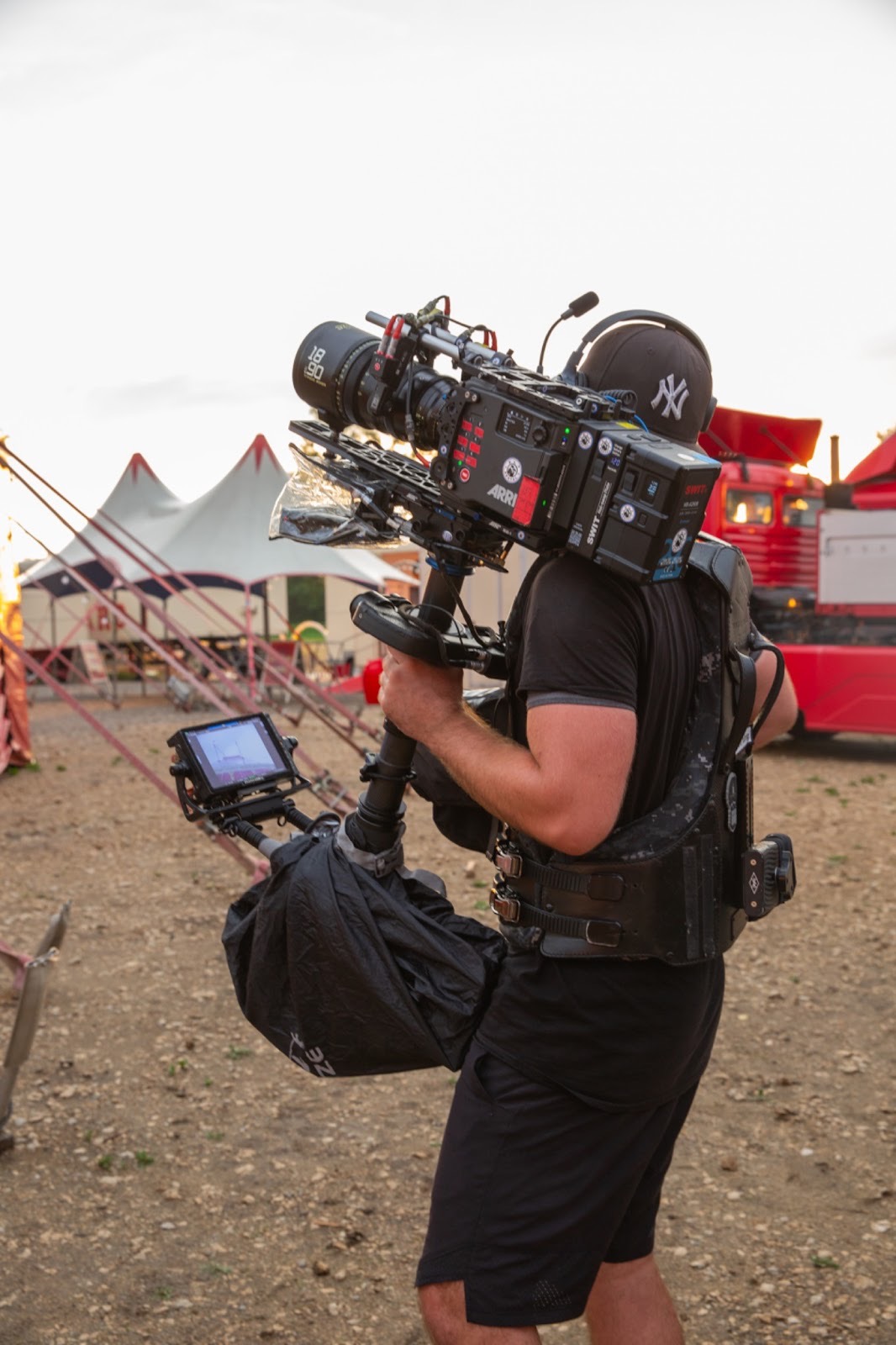
Tango 18-90mm T2.8 on Alexa 35 (s35 sensor camera)
Attempting to scale those same specifications (19-90mm at T2.9) to cover a Full-Frame sensor (43.5mm diagonal) would require massive optical elements to maintain light transmission and peripheral resolution, resulting in a lens that is not only prohibitively heavy but also significantly more prone to aberrations. It would be almost impossible for even professional cinema lenses to achieve.
Manipulating the Circle: Telecompressors vs. Teleconverters
Cinematographers often use optical adapters to change how a lens fits a sensor. These tools allow for the creative use of lenses on camera bodies they weren't originally designed for. Two main tools to achieve this are telecompressors and teleconverters.
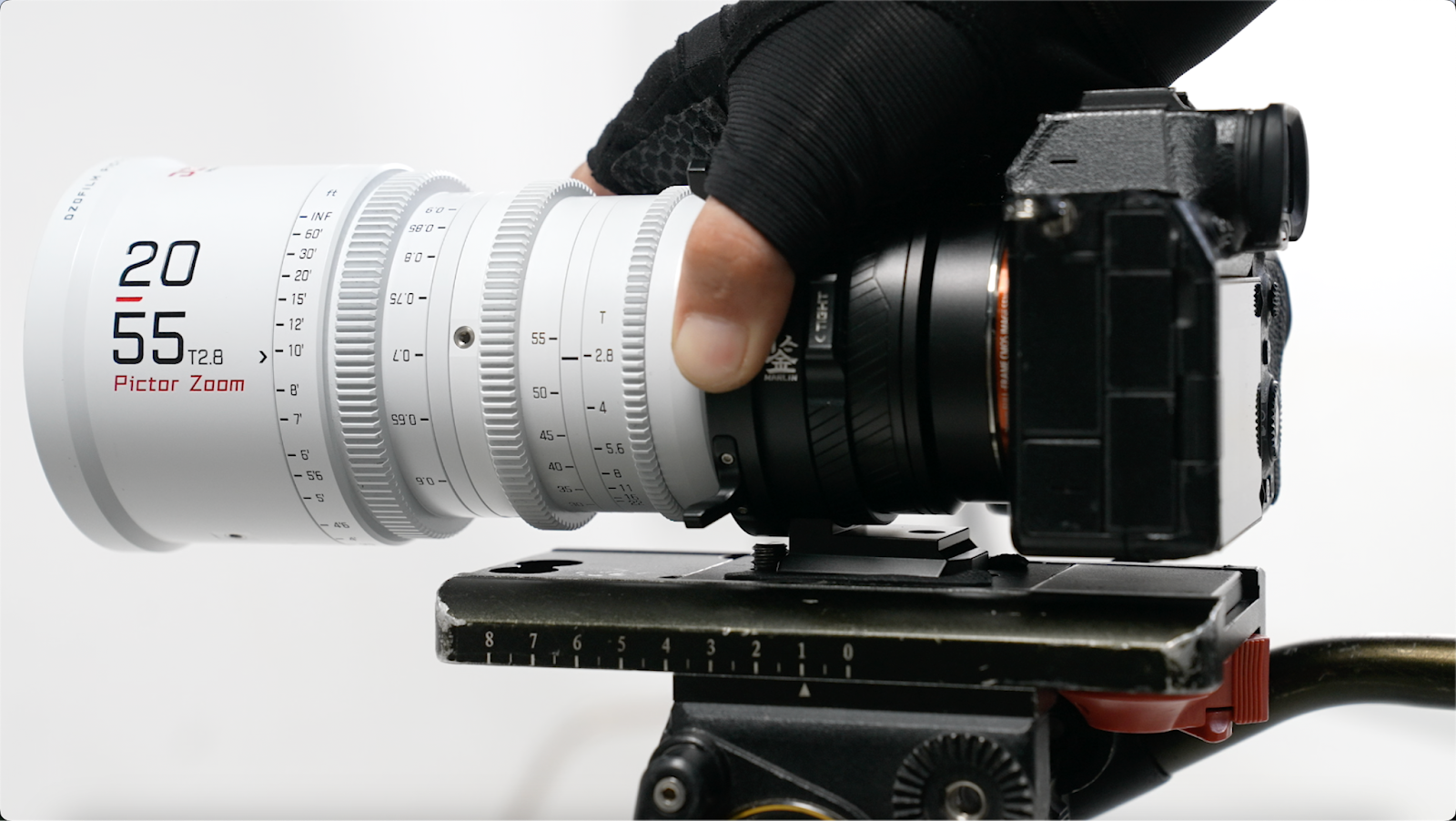
Pictor 20-55 t2.8 (s35 lens) Adapt to Full Frame Camera Via Marlin x1.6 Expender
Telecompressors (Focal Reducers/Speed Boosters): These devices shorten a lens's effective focal length and "brighten" the aperture by concentrating light into a smaller, denser area. This shrinks the image circle. For example, a 0.71x adapter can turn a 50mm T2.0 Full Frame lens into a 35mm T1.4 lens, reducing the image circle from 43.5mm down to 30.9mm to perfectly fit a Super 35 sensor.
Teleconverters (Extenders): Conversely, a teleconverter enlarges the center of the image. While this increases the focal length and reduces the effective aperture (making the lens "slower"), it also expands the image circle.

Effect of Marlin Expander with Pictor Zoom on Full Frame Camera
For example, DZOFILM marlin 1.6x focal expander is expanding the super 35mm lens into full frame by increasing the lens focal length by 1.6 times. This is a popular technique for using vintage Super 35 lenses on modern Large Format or Vista Vision sensors, as it pushes the light out far enough to cover the larger surface area.